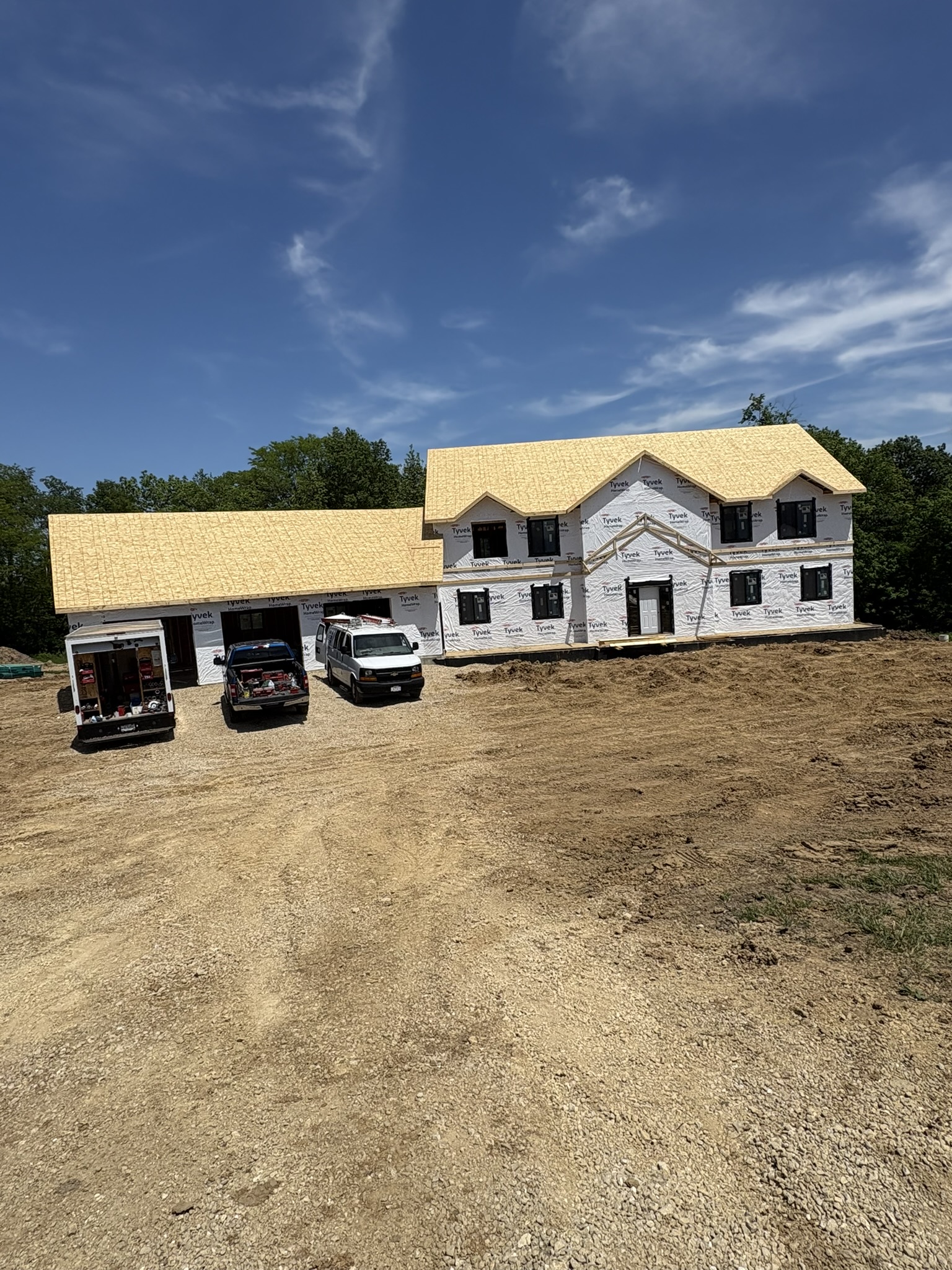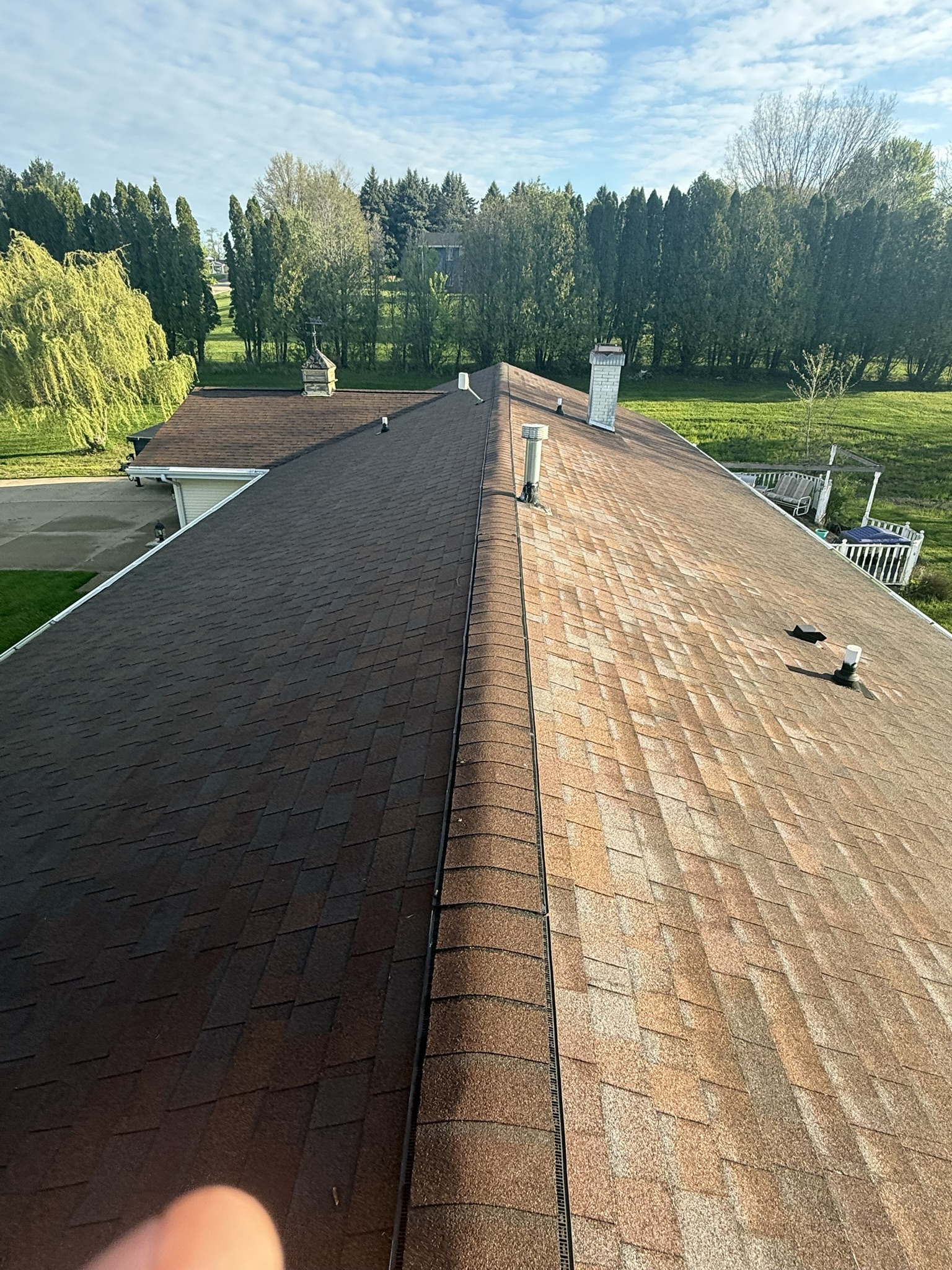
Storms in Jackson County build over open ground and arrive with nothing to slow them down. West of town it is section after section of tilled field, so a spring cell can drop hail on Maquoketa at full strength and push straight-line wind across roofs that never had a windbreak. Around here a roof does not usually die of old age. It gets hit.
NXT Build works out of Zwingle, about fifteen minutes north. Collin ran post-frame crews across eastern Iowa for eleven years before starting this company, and roofing has been part of the work the whole time. He walks your roof himself, tells you what he found, and puts a fixed written price in your hands before anything is ordered.
Older in-town roofs and what a tear-off reveals.
A lot of the housing stock inside Maquoketa dates to the early 1900s through the 1940s, and plenty of those roofs are carrying two or three layers of shingles that were never stripped. Weight is one problem. The bigger one is that nobody has laid eyes on the deck in sixty years.
So we tear off to the wood and look. Sometimes the boards are fine and we underlay and go. Sometimes we find a soft patch under an old valley, board spacing too wide for modern sheathing, or a chimney where the flashing was tarred over instead of rebuilt. When that happens you get a phone call and a photo before we touch it, not a surprise line item afterward. We do not price deck repair we have not found yet, and we do not hide it once we do.
Steel over the farm ground, shingles in town.
Out on the acreages we do a lot of shingle-to-steel conversions on farmhouses and re-roofs on machine sheds. Standing seam hides its fasteners, which removes the failure point that eventually leaks on every exposed-fastener panel once the neoprene washers dry out and back off. On a shed or a shop where the budget wants exposed-fastener panel, we say so plainly and screw it down right.
In town, architectural asphalt is usually the honest answer. It suits the rooflines, it matches the block, and it does its job. If your policy gives credit for impact-rated shingles we will walk you through whether that upgrade earns its keep on your particular roof. We are also on site for roofing on our own post-frame buildings around Maquoketa and tie-in roofs over additions in town.
Hail claims without the door-knocker routine.
You already know the pattern. Hail comes through, and within days there are trucks with out-of-state plates working the streets, telling everyone on the block their roof is totaled. Some of those crews are fine. Many are gone by the time a seam opens up two winters later, and the phone number on the yard sign is dead.
Here is how the insurance side actually works. Your carrier sends an adjuster who inspects the roof and writes a scope of loss, which is their document listing what they agree to pay for. Our job is to be on the roof for that inspection, point out the hits and the damaged flashing and vents they might otherwise miss, and then build exactly what the adjuster’s paperwork covers. We are not paid on your claim and we do not chase storms. Look through the gallery to see finished work, then get in touch and we will come look at it.
Ice dams and the vent work nobody sells you.
Ice damming shows up every winter on older Maquoketa houses, and it is almost never a shingle problem. Warm air leaks into an under-insulated attic, melts the snow up near the ridge, and that water runs down and refreezes at the cold overhang. The ridge of ice grows, backs meltwater up under the shingle courses, and you get a stain on the bedroom ceiling in February.
Piling on more shingles does nothing. What works is balancing the intake at the soffit against the exhaust at the ridge so the attic runs cold, adding insulation where it is thin, and running ice-and-water membrane far enough up the deck to sit above the freeze line. We build that in on every tear-off here, past what code asks for, because winters in Jackson County earn it. Full synthetic underlayment across the deck as well, since felt wrinkles and tears through our temperature swings.
Call and you get Collin on your roof, not a closer at your kitchen table. He tells you whether it is a flashing repair or a full replacement, writes the number down, and lets you think about it. Reach out and we will get on it this week.