Home / Blog / Reading Jackson County Acreage Before You Buy
Walk the ground first. Before you sign anything.
Ten acres outside Maquoketa looks about the same in a listing photo whether it builds easy or builds hard. Here is what we look at when we walk a parcel with a buyer who has not closed yet.
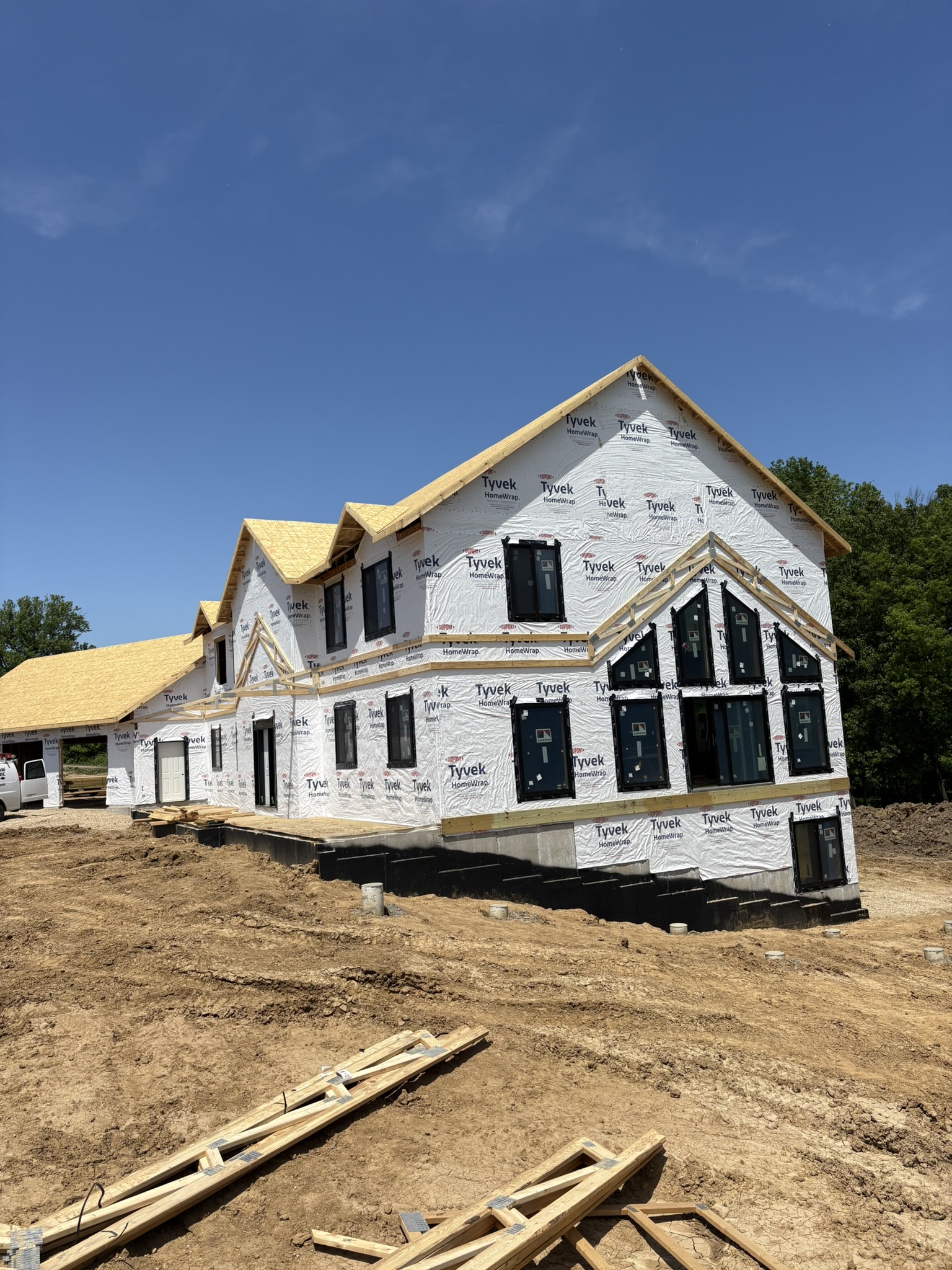
People call us after they close. They send the address, and sometimes we have to tell them the ground they just bought is going to cost them real money before a single post goes in. The walk we would rather do is the one before the offer. It is free, it takes about an hour, and it has talked more than one buyer out of a parcel and into a better one down the road.
Land sells in July. It shows its problems in March.
Almost every acreage we get asked about goes on the market in summer, when the grass is up and the ground is firm and everything drains fine because it has not rained hard in three weeks. That is the least useful time of year to judge a piece of Jackson County ground.
What matters is where the water goes during a March thaw, when the frost is still in and the snowmelt has nowhere to soak. Water runs across the surface then, and it runs the same route every year. You can read that route in summer if you know what to look for: flattened grass laid over in one direction, a gravel fan at the bottom of a slope, willows growing in a line through an otherwise dry field. All the same message. Water comes through here.
The other thing worth doing is asking the seller, or the neighbor across the road, a plain question: how does this ground handle a wet spring. Most people will tell you straight. Around here somebody has usually farmed or hayed the parcel for decades and knows exactly which corner you cannot get equipment into in April.
A building pad sitting in that path is a problem you pay for forever. We would rather move the pad two hundred feet uphill than fight it with tile and grading for the life of the building.
How flat is flat enough
Jackson County is ridge and valley country. Head east toward Bellevue and it gets more so, with timber running down the draws and creek bottoms cutting between the high ground. A lot of the pretty parcels here are pretty because they are not flat.
Ground that looks like a gentle roll to the eye can drop four or five feet across the width of a building pad. That difference is real dirt work: cut on the high side, fill on the low side, and the fill has to be brought up in lifts and compacted properly or the slab cracks in a few years. Fill is the expensive half, because you often have to haul it in.
None of this means a sloped parcel is a bad parcel. Some of the best sites we have built on sit on a shoulder of ground with the view out one side. It means the dirt work is a real line item and you should know the size of it before you decide what the land is worth to you.
That quarter mile lane is not free
A long private lane back to a building site off a county blacktop is the thing buyers romanticize and then live with. Two things to think about.
First, concrete. A ready-mix truck loaded is heavy, and it has to reach your pad and turn around. A soft lane in April means either waiting for it to dry or building the lane properly first. We would rather build the lane first either way, because you are going to want it anyway.
Second, snow. A quarter mile of lane running perpendicular to a northwest wind with open field on the upwind side will drift shut over and over all winter, and you will be the one clearing it. A lane on the lee side of a tree line, or one that runs with the wind instead of across it, is a different life. Look at where the existing driveways sit on the neighboring places. Those people already solved this.
Read the tree lines and the sun
Old timber and old windbreaks on Iowa ground are not decoration. Somebody planted that row on the northwest corner because that is where the winter wind comes from, and it has been doing its job for eighty years. A parcel with mature timber or an intact windbreak on the north and west sides has real value that does not show up in the listing.
Sun matters just as much. A house or a shop with its long side and its main glass facing roughly south gets free winter heat and stays out of the worst of the late summer afternoon sun. On an open parcel you can put the building anywhere you want, so you may as well point it the right way. On a wooded parcel the good south exposure may exist in only one or two spots, and that pins your pad location before anything else does.
Soil signs, neighbors, and what the plat says
You do not need a lab report to learn a lot on a first walk. Push a shovel in and look at what comes up. Dark crumbly topsoil over firm clay is normal and workable. Gray mottled clay near the surface says the water table sits high there for part of the year. Sand and gravel at shallow depth means the ground drains well but the septic conversation changes. Standing on soft spongy ground in a dry week tells you plenty on its own.
Then look at the neighbors. Buildings around here are a record of what works. Where do their houses sit relative to the low ground, which way do the shops face, how long are their lanes, are the older outbuildings settling on one corner. If everybody within a mile put their buildings up on the ridge and left the bottom in hay, there is a reason.
Last, the paperwork. Get a plat and look for the utility easement running through the middle of the parcel, the neighbor’s deeded access across your lane, and how much road frontage you actually have. Frontage governs where a driveway approach can go, and the approach permit is a county conversation, not a seller conversation. County-specific permitting for a build is its own subject, and we walk buyers through it once the land question is settled.
Why we walk it with you before you close
An hour on the ground with somebody who builds for a living answers questions a listing photo never will. We are not there to tell you whether to buy it. We are there to tell you what it takes to build on it, so the number in your head matches the number on paper later.
Sometimes the answer is that the parcel is clean, the pad is obvious, and you should go make your offer. Sometimes it is that the good ground is the back forty and the front is a drainage way. Either way you go into the purchase knowing, and when you are ready to talk about the building itself, we put together a fixed written price that includes the site work instead of leaving it as a surprise.
We cover Jackson County and the towns around it, and you can read more about how we handle custom home building in Maquoketa. If you have a parcel under consideration, call Collin at (563) 581-3819 or reach out through the contact page and we will get out there before your deadline.