Home / Blog / What the Mississippi valley does to a Clinton roof
What the Mississippi valley does to a Clinton roof.
Every Clinton roof I climb has spent years taking hail and wind off the water, plus a winter of melt and refreeze at the eaves. This is what I check up there, and how I talk people through steel versus shingles.
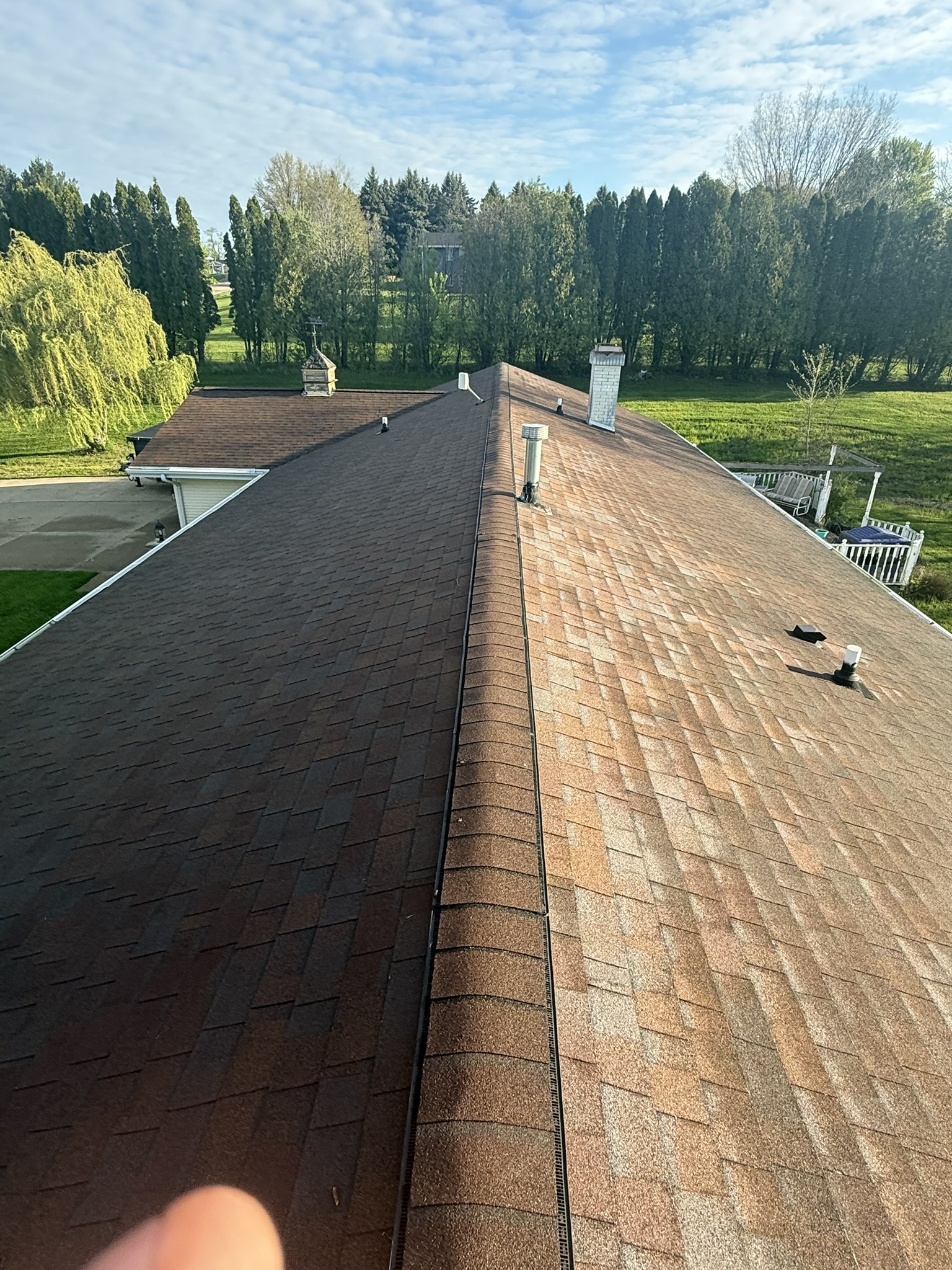
Clinton gets its weather off the Mississippi. Summer sends hail and straight-line wind up the water, and through the winter a roof freezes and thaws more times than anybody counts, which wears on flashing and old felt. When I get called to a Clinton roof leaking years before it should, I usually find an afternoon somebody saved: short nails, too few of them, or a cheap underlayment that had no business in this valley.
Wind and hail come up the river
A river valley behaves differently than flat inland ground when a storm rolls through. At Clinton, the Mississippi corridor gives wind a long open run and a direction, so gusts hit roofs harder and more consistently from the water side than they do in a town set back from the river. That matters for how a roof is fastened and where the vulnerable edges are.
Hail follows the same corridor and hits unevenly. A storm can pound one Clinton neighborhood and leave the next block barely touched, which is why I get on the roof instead of judging it from the street. On the roofs we install, the wind rating of the material and the fastening pattern along the eaves, rakes, and ridge are chosen for a valley that sees more direct wind loading than the regional average would suggest. That detailing is invisible when it is done right and very visible when it is not, usually in a spring windstorm.
Wind starts at the edges. It gets under a corner or a starter course that was nailed light, and the roof peels back from there. On a Clinton house facing the water, the eaves, rakes, starter strip and ridge carry most of the load in a storm, and they are also the parts a crew in a hurry is most tempted to rush. I spend more time on those edges than on any other part of the roof.
The freeze-thaw swing works all winter
Wind and hail are the dramatic failures. The freeze-thaw cycle is the quiet one, and over a Clinton winter it does just as much damage. Snow melts against a warmer roof, runs to the cold eave, and refreezes, and that cycle repeats every time the temperature crosses the freezing line. On a roof that was not detailed for it, that is how ice dams form and how water gets pushed backward under the shingles into the deck.
The defense is in layers you never see once the roof is on. Proper ice-and-water barrier at the eaves and valleys, the right underlayment for the whole field, and adequate attic ventilation to keep the roof deck temperature even are what stop freeze-thaw from working its way in. Those layers are the first thing a fast crew skips, and the skip shows up as a stained ceiling two winters later. On a river-valley roof I price the full underlayment package as standard.
Attic ventilation is the piece most people never think about, and on a Clinton roof it is half the battle against ice dams. A roof deck that stays cold and even across its whole surface does not melt snow into the freeze-thaw cycle in the first place. When the attic is under-ventilated, heat from the house warms the middle of the deck while the eaves stay frozen, and that temperature difference is the engine that drives water backward under the shingles. Balanced intake at the soffits and exhaust at the ridge keeps the deck at one even temperature, so a Clinton winter has far less to work with. I check the ventilation on every roof I walk. You can buy the best shingle on the market and still get ice dams if the air underneath it is not moving.
Steel or shingles for a Clinton roof
Somebody asks me this on almost every Clinton roof walk, usually before I have the ladder off the truck. My answer starts with the building. On a shop, a machine shed or a barndominium I lean steel nearly every time, and standing seam when it fits the job, because the screws sit under the seam where weather cannot get at them. On a house, steel is worth pricing if the budget can carry it. It will outlast a shingle roof against hail and the wind coming off the water.
Most homes I roof in town still end up in 30-year architectural fiberglass shingles over a proper underlayment, and for a lot of Clinton’s older houses that is the sensible money. If your street takes hail often, or your carrier gives a credit for it, I will price Class 4 impact-resistant shingles beside the standard ones so you can see both numbers on paper.
Before I recommend either one, I ask you a few things. How long do you plan to stay in the house? Does your insurance treat the two roofs differently? How do you feel about steel against the trim on an older home? Then I check the part you cannot answer from the kitchen table, which is whether the pitch and framing suit steel at all. If shingles turn out to be the better buy on your house, even after you came in wanting steel, I will tell you that too. The Clinton roofing page covers everything we do on a roof here.
A roof walk beats a windshield price
After a storm moves up the valley, Clinton fills with crews knocking doors, and a lot of them sell a full replacement whether the roof needs one or not. When I walk a roof after a storm, I sort it into piles in my head: what the hail or wind damaged, what was wearing out on its own, and what still has years in it. Sometimes that adds up to new flashing and a few squares. Sometimes it is the whole roof. Nobody pays me a cut on an insurance claim, so the size of the claim has no bearing on what I tell you.
A contractor who works here year round and a storm-chasing crew that shows up after the weather and leaves before the next winter are two different things to have on your roof. When one of those out-of-town crews cuts a corner on the flashing or the underlayment, the leak turns up months later and the phone number on the invoice no longer answers. We are based at Zwingle and we work Clinton and the surrounding county year round, so when we put a roof on your house we are still around if it ever needs a second look. On a roof meant to last decades in this valley, that matters more than a fast price from a truck passing through.
Every roof gets walked before I write a price. If there is a claim, I can document the damage and meet your adjuster on site, and the crew handles the repair or replacement once it is approved. If the roof has good years left, you hear that from me too. For a straight look at your Clinton roof, call me at (563) 581-3819 or use the contact page to schedule a free roof walk.
What a river-valley roof job looks like done right
When I run a replacement, the old roof comes all the way off. I will not lay new shingles over old ones, since I cannot flash or check a deck I never get to see. With the boards bare, I walk the deck and mark every sheet that feels soft or has started to delaminate or rot, and those get swapped before anything else goes down.
Then the roof goes back together from the bottom. Ice-and-water barrier runs along the eaves and down the valleys, underlayment covers the rest, drip edge and flashing go on at the edges and around every pipe and chimney, and the shingles or panels go on last, nailed to a pattern set for valley wind. You will not see any of that once we pack up. When a new roof here lets water in its first February, the cause is usually buried in one of those layers, where nobody looks from the yard.
Timing the work matters in this climate. We plan a Clinton roof tear-off around the forecast so the deck is never left open to weather it cannot take, and on a fall or early-winter job we sequence the work so the house is closed in and watertight before the next front comes up the valley. A crew that peels a roof off with rain on the radar to hit a schedule is a crew that leaves you with water in the house, and we do not work that way. The deck stays covered, the phases line up with the weather, and the roof goes back on in a window it can handle.
Most of the time a family is living in the house while we are up top. Tarps go over the flower beds and the siding gets shielded before the first shingle comes off. On the last day the crew drags a nail magnet across the lawn, the driveway and the beds, and then I want you outside with me for a look at the roof line before we load the trailer.